Everyone Knows Diet And Exercise Are Good For Blood Pressure. So Why Is Yours Still Elevated After 14 Months Of Both?
If you're over 45, doing everything you were told, and your top number still won't move, this is the question I wish I'd asked fourteen months ago: what else is holding this number up?
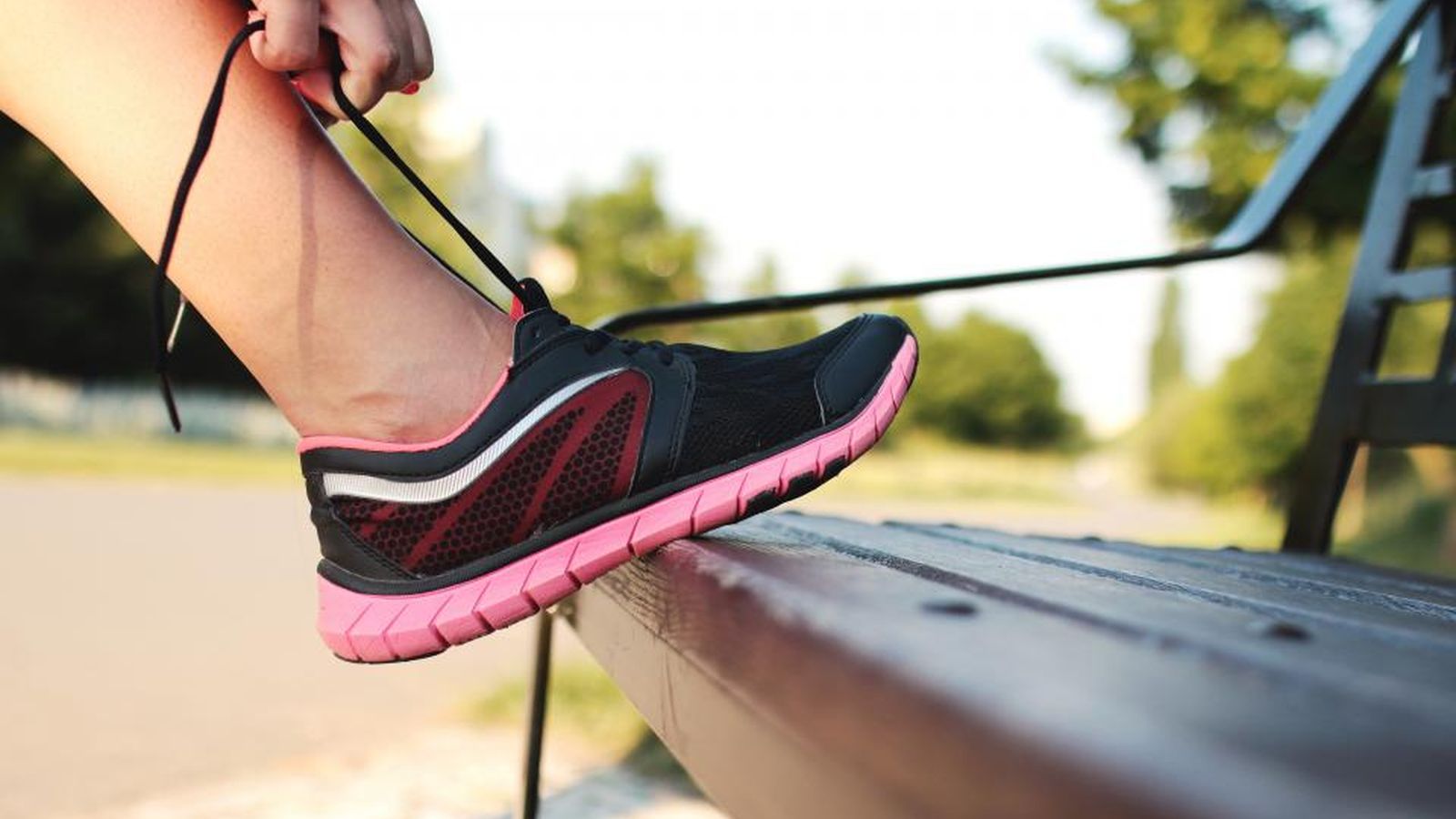
"Are we being consistent with the walking and the diet?"
My doctor asked it gently, with her eyes on the screen, the way she'd ask anyone. The screen said 148 over 88. Fourteen months earlier it had said 152 over 91.
I didn't hear a question. I heard a charge, and I had come ready for it. I opened my bag and set a green notebook on her desk the way you'd set down a receipt: fourteen months of food log, every evening walk with its date, and a blood pressure reading most mornings, in pen. She turned a few pages, said "Good, keep it up," and we moved on to my refills. I drove home understanding that I had spent fourteen months building a defense for a trial nobody had scheduled.
The Case I Was Building
I'm 58, and I keep the books for two small businesses from a spare room. My husband Neil will tell you I'm not a dramatic person, and I'm not. But somewhere in that year I started acting like someone who expected to be put on trial.
I wrote down every walk, even the short ones, in case anybody asked. I took my reading twice and wrote down the lower one, which I called rounding. I mentioned the twenty-six pounds at family dinners before anyone could bring up my blood pressure, and I never mentioned the blood pressure. When the cuff on the kitchen counter read high, I'd put it in the drawer for a few days, because I wasn't ready to add a bad entry to the case.
Twenty-six pounds and fourteen months had bought me four points off the top number. I had done that subtraction so many times I could do it asleep, and underneath it sat one sentence I never said out loud: if the number is still up there after all this, I must not be doing enough.
"Is It Helping?"
My friend Pauline walks the park loop with me on Tuesday evenings. Her husband Walt had a heart attack last spring, at 61, and now he walks it with us, a few steps behind, stopping at the bench on the second lap to catch his breath. He used to run that loop.
One Tuesday, while Walt rested on the bench, Pauline watched him and asked me, very quietly, "Is it helping? The walking?"
I said yes, because that's what you say. Then I thought about it the whole drive home, because I didn't know, and because I knew exactly why she was asking. She wasn't asking about my number. She was asking whether the one thing she and Walt were doing with their Tuesdays was enough.
I did the arithmetic, because that's what I do. At four points every fourteen months, the 130 my doctor wanted was more than five years away. And I had read about the big study that combined about a million adults and followed them for years. Between ages 40 and 69, every 20 points higher in a person's usual top number went with about double the death rate from heart disease and stroke. I know it describes groups, not me. But at three o'clock in the morning it's a number with your name on it. I lay beside Neil, listening to him breathe, doing the arithmetic that doesn't have a column, until the window turned gray.

Checking the Entries
When a column won't balance, I check the entries before I blame the person who made them. So I booked time with the nurse at my doctor's office to make sure I was measuring right.
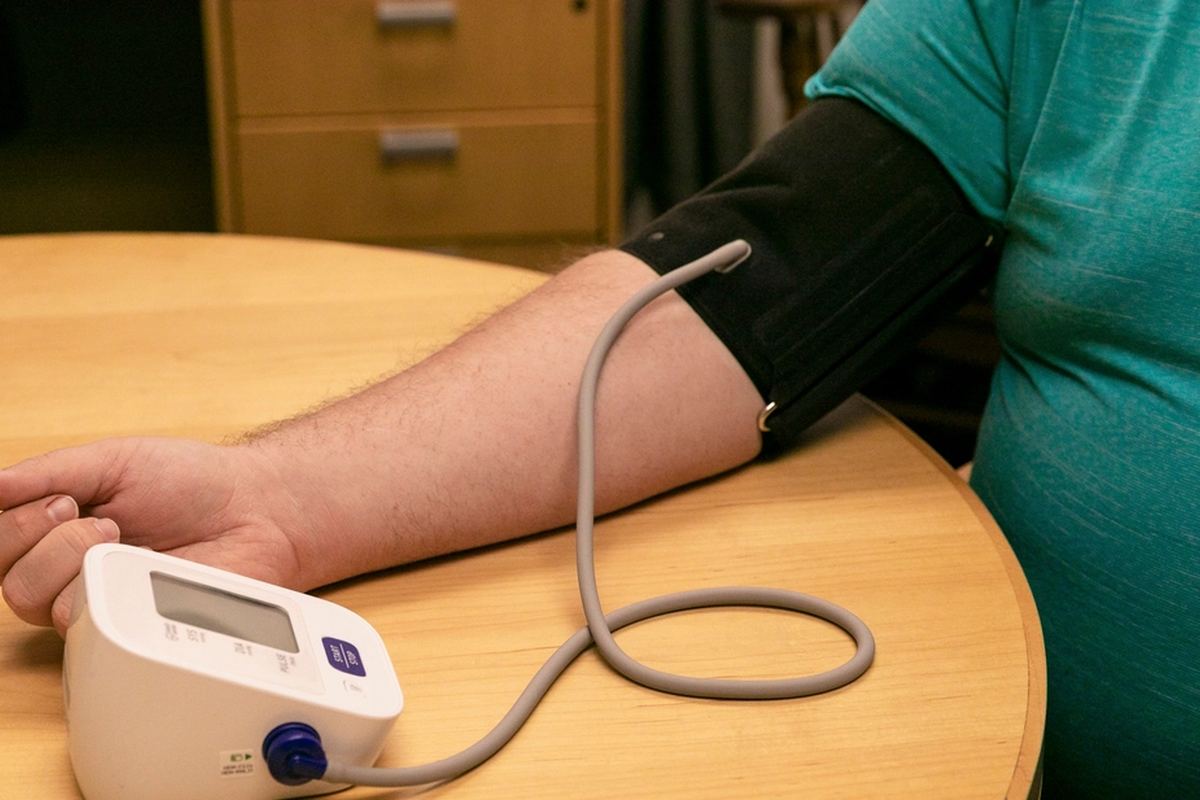
She showed me the routine: a validated cuff in the right size, arm at heart level, back supported, feet flat, no talking, no coffee, cigarettes, alcohol or exercise for half an hour before. Then the part almost everyone skips. Sit quietly for more than five minutes, take two readings a minute apart, and keep both. "Not the friendlier one," she said, and my face went hot.
I did it her way for two weeks, and the average came out right where my sloppy readings had always been. The pattern was real. I brought the page back, and the nurse read it and said, "The numbers are real. Sometimes the scale and the pressure just don't move on the same schedule. Read up on what pressure connects to, and bring your questions next time."
That night I typed into my phone: losing weight, blood pressure still high. Forum after forum, I found people with my exact question and no better answer. I'd taken the nurse's advice literally, so I read up on what pressure connects to. One review sent me to studies about the fat that wraps around blood vessels, and I read them at the kitchen table until Neil turned off the lights.

The Part Nobody Had Put on My List
Here's what the studies said, in plain words. Many of the larger arteries are wrapped in a layer of fat right against the wall, not the fat under your skin, like padding around a pipe. In labs it acts like active tissue, sending signals to the vessel it touches, and research suggests that when it works poorly it may change how that vessel behaves. In people, studies find more of it alongside higher pressure. That's an association, not proof it's behind anyone's readings, and neither a checkup nor a scale measures it.
So on the mornings the cuff said 148 and the notebook said I'd done everything, nothing had to be a lie. A reading can stay put while the work is completely real. The number was never a grade.
Why I Added Something
I wasn't going to stop anything, and I wouldn't tell you to. The walks and the food log were aimed at my weight, the pill at my pressure from one direction, and the notebook at my nerves. I still do all four. But when I laid the list out like an account, nothing on it was a supplement that had been studied, in people, on the number itself, and that was the gap I wanted to close.
The one that kept coming up was nattokinase, an enzyme from natto, the fermented soybeans eaten in Japan. In two eight-week trials, adults with higher-than-normal pressure who took nattokinase ended up lower than those on placebo: by about five and a half points on the top number in one trial, and by about three points on the bottom number only in the other. The placebo groups' numbers moved too. None of those adults were taking blood pressure medicine, unlike me, and both trials were supported in part by the company that sells the nattokinase they tested. A three-year placebo-controlled trial in 265 healthy, low-risk adults found no significant difference in blood pressure, artery thickness or stiffness. So it's a small, mixed signal, and it's about the number itself, which is why I looked at it.
What I added is product, a supplement whose main ingredients are nattokinase and vitamin K2, along with several other ingredients, mostly plant extracts. It sits beside the pill, never in place of it. I couldn't find a study of the formula itself, and the K2 research on artery stiffness is mixed, so it's the nattokinase I'm leaning on. My doctor knows everything I take, and the list goes to every appointment. The trial amounts may not match any bottle, mine included, so I never treat a bigger number on a label as a better one.
Sixty Mornings
It's been about two months, and the mornings look different.
I wake up before the alarm now. The cuff sits on the counter beside the bottle and my coffee mug, and I sit for five minutes first, feet flat, hands still. I used to hold my breath through the whole reading, shoulders up around my ears. Now I breathe. I take two readings a minute apart, write down both in pen, and close the notebook without the stomach drop. Neil walks past and asks how the number looks. I tell him the number, out loud, and he says I sound different saying it, which I think means I've stopped bracing.
My head is quieter, too. The three o'clock arithmetic hardly comes anymore, and most nights I sleep until the window turns light. I didn't know how much room the defense had been taking up until it was gone. I've started saying yes to things again. A drive to the coast with Neil. A whole Saturday with no logging.

At my last appointment I didn't bring the green notebook. I brought one page of paired readings and the list of everything I take, product included, and I asked her what else belonged in the picture. She read down the list, said, "Thank you, this is useful," and for the first time that day she looked up from the screen. At Sunday dinner I said the number out loud before my sister had finished passing the potatoes, and nobody changed the subject.
Last Tuesday, Walt took the bench on the second lap, and Pauline and I stood beside him while he got his breath. Then she looked at me and said, "Third lap?" We took it, slowly, with Walt calling out that we were cheating. Near the gate I jogged ten steps, just because I wanted to, and Pauline whooped so loudly that a man with a dog turned around. Fourteen months of walks did that. I had been so busy defending the work that I never let myself notice it.
When we got back, Pauline asked it once more. "Is it helping?"
"Yes," I said, and for once it wasn't just what you say. "Look at us. And I know what I'm measuring now, and it was never whether I'm good enough."
Walt looked up from the bench and said, "Same time next Tuesday," and nobody had to answer that one.
What I'd Do If You're Where I Was
Take your readings the way the nurse showed me and write down both. Bring the page to your doctor the way I'd bring an account that won't close, and ask what else belongs in the picture and whether anything about your treatment should change. If you decide to add something, add it the way I did: small, tested on the number itself, and on your doctor's list. Read what was studied, in whom, and at what amount, and if a page won't tell you the weak parts, close it.
Your next reading is already on the calendar, and you'll take it either way. The only choice is whether you walk in carrying a defense or a question. It took me fourteen months to find out which one I was holding.
If you want to see what I added, here is the label: product, nattokinase with vitamin K2.
Portfolio sample. Copy shown as it shipped for a client in health ecom; brand and product names are withheld and buy links are disabled. Product claims belong to the advertiser. This is not medical advice. Photos are stock images chosen for this sample, not from the original ad.