My Husband Stopped Sleeping With Me When I Started Losing My Legs
Last February, my husband of forty-four years carried his pillow down the hall to the guest room, and I'm the reason he went.
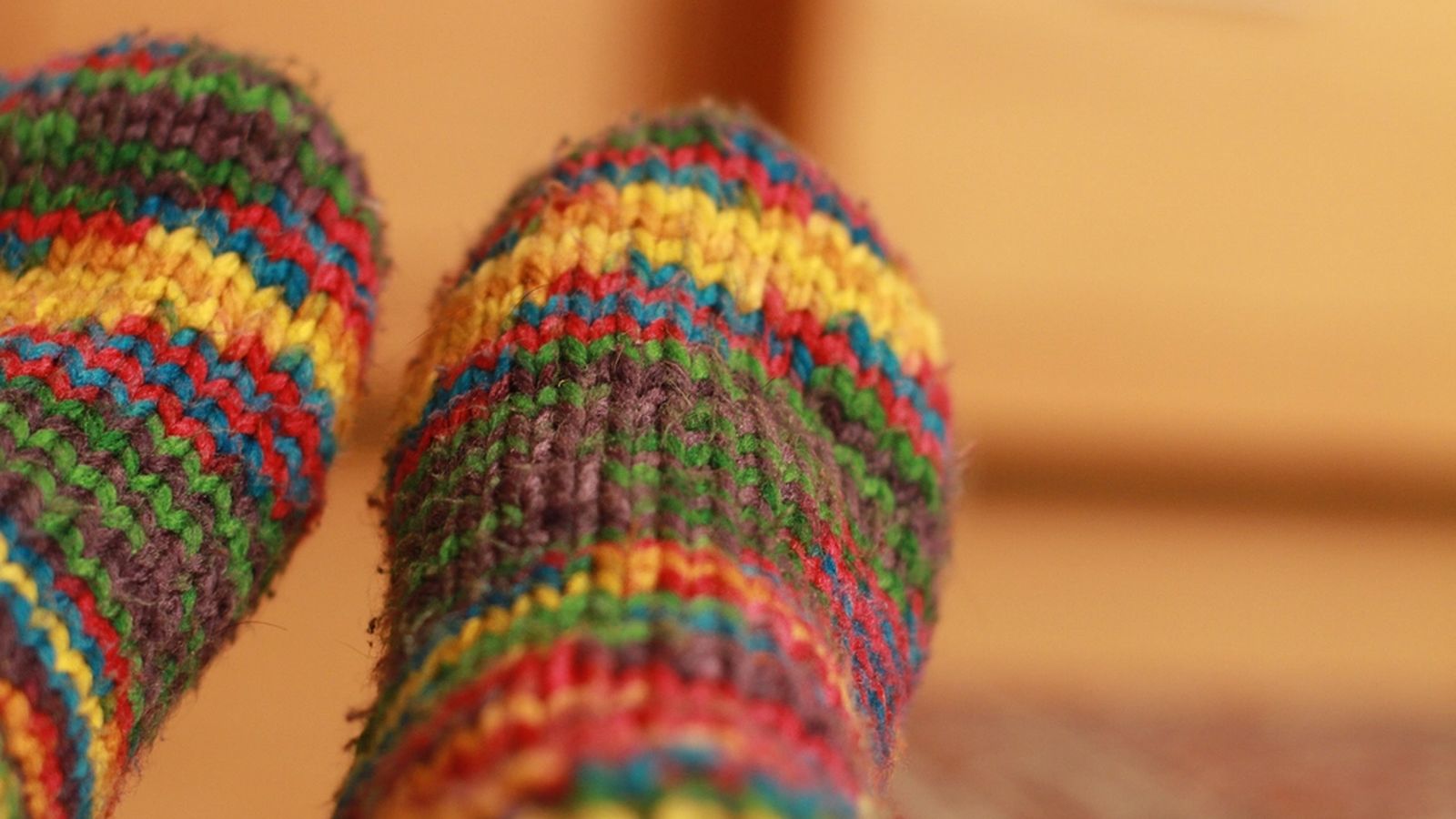
I had been doing it to him every single night for two winters, and the only thing worse than what I did was how long it took me to admit why I was doing it.
Before you wonder, there was no other woman and no other man.
Ray is seventy-one, he still walks around the car to open my door, and in forty-four years he has never once gone to bed angry with me.
He didn't go down that hall because of anything he did.
He went because of me.
When our daughter Karen asked why her father was sleeping in the room with the sewing machine, I told her it was his snoring. I said it with a little laugh, the way you'd say it to the ladies after church, and she believed me because I was always the one in our family who had the answer.
That was the first lie.
There were a lot more after it, and I want to tell you about all of them, because I think some of you are telling the same ones right now.
Let me back up, because none of this makes sense unless you know who I was before.
My name is Diane. I'm sixty-eight, and I live in a brick ranch house outside Dayton, Ohio, that Ray and I bought the year Karen started kindergarten.
I was a nurse for thirty-eight years. I started on a medical floor when I was twenty-two and finished in the ICU, and in all those years I worked twelve-hour shifts on my feet, mostly nights, mostly without sitting down long enough to finish a cup of coffee.
I loved it. I loved being the person who knew what to do.
There's a little test every nurse learns in her first week, and I must have done it ten thousand times. You take the patient's hand, you press on a fingernail until it goes white, and then you let go and count while you watch the pink come back.
If it comes back in under two seconds, the blood is getting where it needs to go. If it takes longer, you pay attention, because something between the heart and that fingertip isn't working the way it should.
I did it to patients coming up from surgery, to old men with bad hearts, to babies in the ER when I floated down there. I did it to my own mother more times than I can count.
Remember that test, because it comes back.
Ray was a mechanic for the county garage, and he's the steadiest man I've ever known. My feet have always run a little cold, and for forty winters he let me put them on his stomach when we got into bed.
He'd jump and say "price of admission" every single time, like it was the first time, and then he'd hold my ankles until they warmed up. That was our little joke for four decades.
I want you to know that, so you understand what it meant when he stopped laughing at it.
I've always been the one who takes care of people. When Ray had his knee done, I was the nurse.
When Karen had the twins, I was the nurse. When my mother Ruth started to slow down at seventy-four, I was the nurse for six years.
I did her pills, her appointments, her bath on Sundays, and at the end I pushed her wheelchair down the hall of the care home every afternoon so she could see the bird feeder by the window.
I was good at it, and I was proud of it. I never once imagined I'd be the one in the chair.
Here's how it started, as best I can tell.
About three years ago my feet went from a little cold to cold all the time, and not just in winter. I'd get into bed in July and they'd be like two blocks of ice, and they would stay that way for hours.
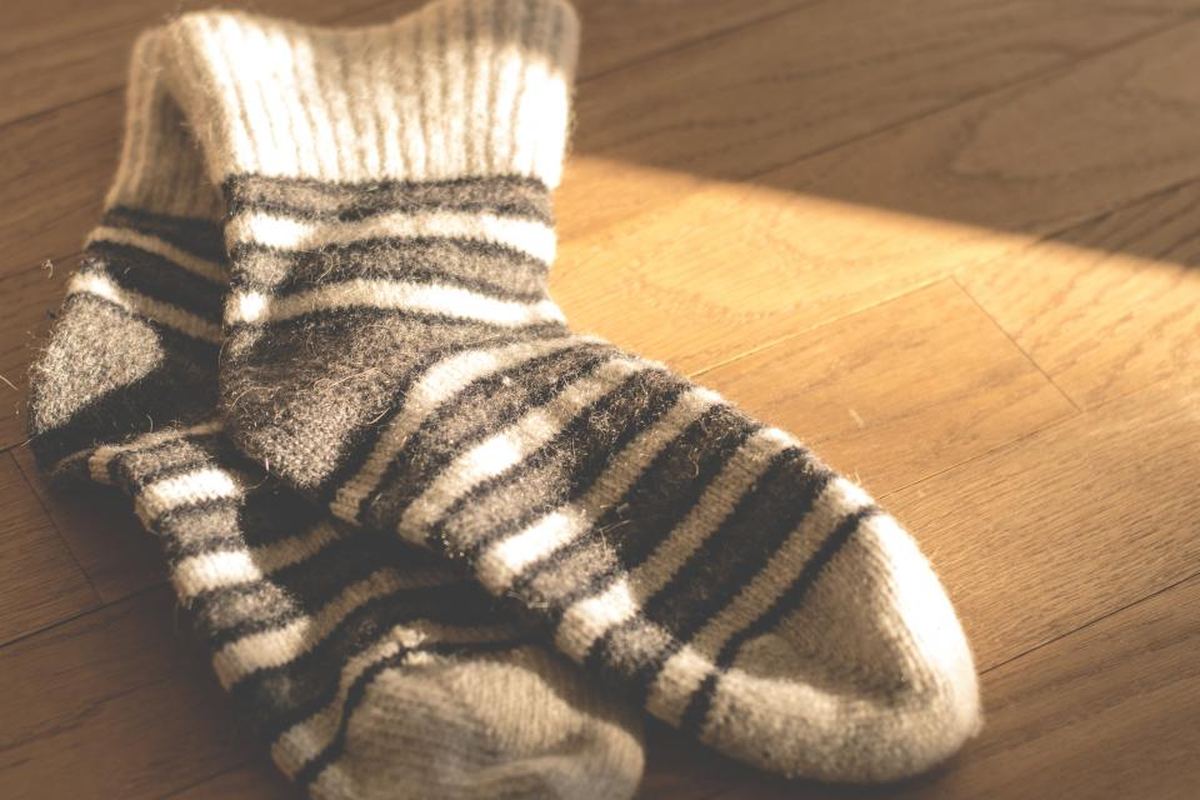
I started wearing socks to bed, then wool socks, then two pairs. Ray bought me a heated blanket for Christmas, and I started switching it on half an hour before bed so the sheets would be warm when I got in.
My fingers would go white and stiff holding a cold glass of iced tea at a cookout. When the grandkids grabbed my hand, they'd pull away and say "Grandma, you're freezing," and I'd laugh and say that's what happens when you get old.
Then my legs started to go.
There's a pond near our house with a walking loop around it, about two miles if you go all the way. I walked it twice around every morning for six years after I retired, and I was proud of that too.
Somewhere along the way, twice around became once around. Then once around became most of the way.
My calves would get heavy and tired, and my feet would go numb and cold even in good walking shoes, and I'd turn back early and tell myself I'd do the whole thing tomorrow.
About three-quarters of a mile in, there's a bench with a little brass plaque on it that says "For Walt, who walked here every day." I didn't know Walt, but I'd smile at that plaque every morning on my way past.
For six years I never sat on that bench once. I didn't need to.
Last September, I sat on it.
I sat down because my legs had simply quit. They didn't hurt so much as they had nothing left in them, like a car running on fumes.

I told myself I'd rest for a minute. Then I told myself five more minutes.
Then I realised I had been sitting on Walt's bench for twenty-five minutes, and I could not make myself stand up and walk home, because I wasn't sure my legs would get me there.
I want to tell you what I'd been telling everyone up to that point, because it matters.
I told my sister Joanne that it was my knee. I told the ladies at church that the cold just gets to me more these days.
I told Karen her father snores. And I told myself, every single day, that this is just what sixty-eight feels like.
I'd even asked my doctor. I'd been going to the same man for fifteen years, and I trust him.
He ran my bloodwork and looked at it and smiled. "Diane, your bloodwork is beautiful," he said. "Your blood pressure's better than mine. Some of us just run cold. Wear wool socks."
When I mentioned my legs, he sent me for an ultrasound on the arteries in my legs, and it came back perfect.
I remember feeling relieved and stupid at the same time. Relieved that nothing was wrong, and stupid because something obviously was, and I couldn't explain it.
He wasn't wrong, by the way. Everything he checked really was fine.
I didn't understand yet that what was wrong with me was somewhere nobody had checked.
And there was a date on my calendar that I couldn't stop looking at. Every spring for twenty years, my sister Joanne and I do a long walk together, just the two of us, a trail along the river in Brown County, Indiana.
We drive over, we stay at the same little inn, and we walk the whole twelve miles in one day and eat pie at the end of it. This spring was supposed to be the big one, because Joanne turns seventy in May.
We'd been talking about it for two years. And I was sitting on a bench three-quarters of a mile from my own house, unable to stand up.
That's when Ray's car pulled up on the road beside the path.
He'd come looking for me because I'd been gone too long. He didn't honk, and he didn't call out.
He just leaned over and pushed the passenger door open and waited.
I got up, slowly, and I walked to the car, and I got in. He didn't say one word the whole way home, and neither did I.
He just reached over at the stop sign and put his hand on top of mine, and I watched him flinch at how cold it was, and then he left it there anyway.
I'll be honest with you. That silence in the car was worse than anything he could have said, because I knew exactly what he was thinking. I was thinking it too.
My mother started with benches.
That's how it went with Ruth. First she needed to sit down halfway through the grocery store.
Then she needed the bench at church before the walk to the car. Then it was a cane, then a walker, then a wheelchair, and then the room at the care home with the bird feeder by the window.
She missed her grandson's wedding because she couldn't sit in a car for three hours. She'd been the most independent woman I ever knew, and the last two years of her life she couldn't get to the bathroom without help. I know, because I was the help.
That night I couldn't sleep. Ray was down the hall in the guest room by then, because a month before that he'd finally said, as gently as a man can say it, "Di, I love you, but I can't sleep next to those feet anymore."
Around eleven o'clock I got up and went to the hall closet, and I took out my mother's walking stick. I'd kept it after she passed.
It's a plain wooden one with a rubber foot, and the handle is worn smooth where her hand used to go. I stood in my own hallway in my nightgown and two pairs of socks, holding my mother's cane, and I cried like I hadn't cried since her funeral.
Ray heard me. He came out and held me for a long time, and then he went back down the hall to the guest room, because what else could he do.
After he went back to bed, I did something I'd done ten thousand times for other people and never once for myself. I sat down on the edge of the bed, I pressed my thumb into the nail of my big toe until it went white, and I let go and counted.
I got to six.
The last time I counted that high, I was sitting on the edge of my mother's bed.
I sat there for a long time after that, thinking. And what I kept coming back to was that it wasn't one thing.
It wasn't my feet, or my legs, or my hands on the iced tea glass. It was every far end of me.
My toes, my fingers, my calves on the walking loop. Everything farthest from my heart was slowly going cold and quiet, and I'd been calling it age for three years because that's what everyone else called it.
About a week later, I was back at the pond. I'd decided I would at least walk to the bench every day, even if that was all I could do.
I was sitting on Walt's bench catching my breath when a man sat down on the other end with a scruffy brown dog on a leash.
I knew him to nod at. His name is Gus.
He's seventy-four, he walks the loop every morning with that dog, whose name is Biscuit, and he always wears the same faded green ball cap. I'd never really talked to him beyond "good morning."
He looked out at the water for a while, and then he said, "My wife used to sit on this bench." I said I was sorry, because I knew he was a widower.
He said, "Marguerite had feet like a mountain stream. Forty years I slept next to them. I used to tell her it was like sleeping next to a bag of frozen peas."
I laughed, and then I did something I hadn't done with anyone, not even Joanne. I told him the truth.
I told him about the bench, and the guest room, and my mother's walking stick.
Gus didn't say anything for a minute. Then he asked me if I knew what he used to do for a living.
He put in irrigation for forty years. Sprinkler systems, drip lines, all of it, for farms and golf courses and people's backyard gardens all over Montgomery County. And he said something I have thought about every day since.
"When a drip line gets old," he said, "the first emitters to go dry are always the ones at the far end of the line, never the ones by the tap. And the funny thing is, nobody ever blames the far end. They figure that's just the way the far end is.
"And the first thing everybody does is crank the tap up harder, which doesn't fix a thing, because the problem isn't the pressure at the tap. The problem is that over the years the little feeder lines silt up, and some of them get capped off because nobody's been using them, and the water can't get through to the end of the line no matter how hard you push it."
Then he looked down at my feet and said, "Your body's got a line just like that. So did mine."
He told me that at seventy, he couldn't make it once around the pond. He'd sit on this same bench and tell himself it was his age, the same way I had.
Now he walks it twice every morning, sometimes three times if Biscuit is feeling ambitious. I asked him what he did, and he got a little embarrassed.
"I'm not going to push pills on you," he said. "I push water uphill. That's all I know how to do."
But I kept at him, because I'm a nurse and I don't let people off the hook that easy, and finally he said, "I'll tell you what I did. But you were a nurse. Don't take my word for it. Go home and look it up."
So I did.
Now, you need to understand something about me. I'm the last person on earth who falls for a miracle.
In thirty-eight years of nursing, I watched patients spend their savings on copper bracelets, magnet insoles and every other kind of nonsense, and I once had a man swear to me that gin-soaked raisins fixed his arthritis. I used to roll my eyes in the break room.
And I'd already thrown my own money at my feet. I added it up that night at the kitchen table, and it made me feel a little sick.
There was the drawer full of wool socks and bed socks, about ninety dollars' worth, and the heated blanket, and two heating pads from the drugstore that both died within a few weeks.
There was a foot circulation machine from a TV ad that cost me two hundred and seventy-nine dollars and is still sitting in the hall closet next to my mother's cane.
There were four months of a beet powder that was supposed to be good for circulation, which gave me leg cramps so bad I'd wake up in the night. And one bottle of nattokinase from the drugstore, because a lady at church swore by it, which did absolutely nothing that I could tell.
All together, close to six hundred dollars, and my feet were exactly as cold as when I started.
So I didn't sit down at that kitchen table to be sold anything. I sat down because a man with no reason to lie to me had described my body better than my own doctor had, and I wanted to know if he was right.
Here's what I'd always believed, and I think most of us believe it. I thought circulation was about two things, the pump and the pipes.
Your heart is the pump, your arteries are the pipes, and if the pump is strong and the pipes are clear, the blood gets where it needs to go. That's how I was trained to think about it, and it's exactly what my doctor had checked.
My heart was strong, my blood pressure was good, and the big arteries in my legs were clear on the ultrasound. The pump and the pipes were perfect.
But that's not where the blood actually does its work.
The blood does its work out at the very end of the line, in the capillaries. These are the tiniest blood vessels in your body, so small that red blood cells have to line up single file to get through.
There are billions of them, packed into your muscles and under your skin, and they're the last stretch of road between your heart and every cell in your fingers, toes and legs. That's where the oxygen gets handed over. That's where the warmth arrives.

And here's what I found, sitting at my kitchen table at midnight, that I had never been taught in nursing school.
As we get older, that network of tiny vessels thins out. Researchers who looked at the leg muscles of healthy people in their seventies found about a quarter fewer capillaries feeding each muscle fiber than in young adults.
Under the skin, the little loops of capillaries can drop by close to half, and in some studies more, in the oldest people they've looked at. Some of those vessels are gone for good, and some of them are still there but have shut down, like Gus's capped-off drip lines.
I sat back in my chair and thought about my nail test. Ten thousand times I'd watched the pink come back in a patient's fingertip, and I knew a slow count meant blood wasn't reaching the end of the line.
I'd just never once asked why the count gets slower in all of us as we age. The answer was right there.
The far ends of the line were drying up, exactly the way Gus said.
And that's when it hit me that this wasn't really "just age." Age was the reason the roads were closing, but the closing roads were the actual problem.
And a problem with roads is something you can do something about.
It also explained every single thing I'd tried.
The wool socks and the heated blanket and the heating pads warmed my skin from the outside, but the cold was coming from the inside, because the blood wasn't arriving to warm it. The minute the blanket went off, the cold came right back.
The beet powder, the way I understand it, is meant to open up your blood vessels, the big ones, for a few hours. That's cranking the tap.
It doesn't do anything for the little feeder lines at the far end that have silted up. And the foot machine was squeezing my feet from the outside, which is about like stomping on the end of a hose and hoping the water goes somewhere useful.
And here's the one that made me put my head in my hands. I'd been telling myself that if I just walked more, I'd fix it.
But I was walking every single day, and my walks kept getting shorter, because my legs weren't getting enough blood to walk farther. The fix was shrinking right along with the problem.
I wasn't lazy, and I wasn't old. I had a delivery problem at the end of my line.
So I kept reading, and here's what gave me hope.
First, those little roads can come back. In one study, men and women in their sixties who started walking regularly for nine to twelve months grew about twenty-one percent more capillaries in their leg muscles.
In another, women aged fifty-seven to seventy-six grew twenty to twenty-five percent more in just eight weeks of training. So the walking I'd been trying to do was exactly right.
It just wasn't enough on its own, because I couldn't walk far enough to do it.
Second, I looked up what Gus had told me he takes, which was nattokinase.
Nattokinase is an enzyme that comes from natto, a sticky fermented soybean dish that families in Japan have been eating for breakfast for more than a thousand years. A big study in the city of Takayama, Japan, followed thousands of adults for years and found that the people who ate the most natto had fewer deaths from heart and blood vessel disease.
That doesn't prove the natto did it, and I'm not going to pretend it does, but it made me curious.
What made me sit up was two small studies out of Japan, both done the careful way, with a placebo and neither the people nor the researchers knowing who got what. In the first, healthy adults who took a single dose of nattokinase had more blood flowing to their fingertips within two to three hours than when they took the placebo.
In the second, people put their hands in cold water, and after taking nattokinase their hands warmed back up faster than after the placebo.
Now, I'm a nurse, so I'll tell you straight. Those studies were small, and they were done on younger, healthy people, and they measured hands, not feet.
Nobody has run a big study on sixty-eight-year-old women with cold feet. But I thought about it like I'd think about it on the floor.
If something helps blood get through to the end of the line in your fingers, it makes sense that it helps it get through to the end of the line in your toes, because it's the same kind of tiny vessel doing the same job. That's my reasoning, not a study, and you can make of it what you will.
And Gus had mentioned one more thing, vitamin K2. Most of us get vitamin K from leafy greens, but that kind, K1, mostly goes to the liver to help your blood clot.
The other kind, K2, is what switches on a protein in your blood vessel walls whose whole job is to keep calcium out of them, so it goes to your bones where it belongs. Which, as a woman who has taken calcium pills for fifteen years for her bones, I found very interesting.
The next morning I was back on Walt's bench, and when Gus and Biscuit came around, I told him he was right and I wanted to know exactly what to buy. He took off his cap and scratched his head and said, "I'm no expert. But I'll tell you what I looked for, because there's a lot of junk out there."

He had four rules, and he counted them off on his fingers.
"One, look at the label for the nattokinase, and look for the number with FU after it. That's the strength. Most of the bottles you'll find say two thousand. The one I take has ten thousand eight hundred." I remembered the drugstore bottle in my cabinet, and when I got home I checked, and sure enough it said two thousand.
"Two, it's got to have the K2 in it, and the long-lasting kind, which says MK-7 on the label. Otherwise you're only doing half the job."
"Three, you take it every day, and you keep walking. It's not instead of the walking. It's so the walking can do its work."
"And four," he said, "buy it from somebody who'll give you your money back if it doesn't do anything for you. Anybody who believes in what they're selling will let you send it back."
So I went shopping, the way I used to check a medication order, line by line.
The drugstore had six different nattokinase bottles on the shelf. Five of them said two thousand FU.
One said four thousand. Not one of them had K2 in it.
Online I found dozens more, and most of them had the same two thousand number, a lot of them didn't list FU at all, and only a handful had any K2 in them. I spent two evenings on it.
The one that checked every box Gus gave me was called product, from a company called brand. Two softgels give you ten thousand eight hundred FU of nattokinase, plus vitamin K2 as MK-7, plus a few other things like CoQ10 and aged garlic.
And it came with a ninety-day money-back guarantee, which meant the only thing I was risking was finding out.
I ordered the buy-two-get-one-free deal, so I'd have three bottles to give it a fair try, and I didn't tell Ray.
I didn't tell him because I could already hear him, not unkindly, saying "another one for the drawer." He'd watched me try the socks and the blanket and the machine and the beet powder.
He was tired, and he had every right to be. So I took two softgels every morning with breakfast while he was out getting the paper, and I kept walking to Walt's bench every day, and a little past it when I could.
I'm going to be honest about the first two weeks, because I think honesty matters more than a good story. Nothing happened.
My feet were cold, the blanket was on, Ray was down the hall, and I was starting to wonder if I'd just added another bottle to the six hundred dollars.
In the third week, I handed Ray his coffee one morning, the way I've done every morning for forty-four years, and our hands touched on the mug. He looked down at my hand, and then he looked at me, and he said, "Your hand's warm."
That was all he said, just those three words, and then he went back to his paper. But I stood at that counter and pressed my thumbnail into my finger, and I counted, and the pink came back before I got to three.
In the fifth week, I was walking the loop on a gray Tuesday morning, thinking about what to make for supper, and somewhere around the far side of the pond I realised I'd walked right past Walt's bench without even noticing. I hadn't needed it.
I actually turned around and walked back to it, and I stood there and said "good morning, Walt" out loud like a crazy woman, and then I walked the rest of the way around.
In the eighth week, I got into bed one night, and it was a good ten minutes before I realised I'd forgotten to switch on the heated blanket. My feet were just warm, not hot but normal, like other people's feet, the way they hadn't been in three years.
That same week Joanne called about the trip, and halfway through the conversation she stopped and said, "You sound different. You sound like you." I told her about the bench and the drip lines and the nattokinase, and she was quiet for a second and then she said, "Book the inn."
I'm not going to pretend it was all the softgels. I was walking every single day by then, the whole loop and then some, and I know from what I read that the walking was rebuilding those little roads.
But for three years, I couldn't walk far enough to rebuild anything. Something had to get the blood through to the end of the line first, so the walks could do their work.
That's what I believe happened, anyway, and I've spent my life watching how bodies heal.
Ray never said anything about the guest room. One night, about ten weeks in, I was reading in bed, and I heard him in the hall.
He came in with his pillow under his arm, and he put it down on his side of the bed, and he got in. I put my feet on his stomach out of forty years of habit before I even thought about it, and I waited for him to jump.
He didn't jump. He just said, "Huh."
And then he said, "Price of admission," and held on to my ankles anyway.
Karen still thinks it was his snoring. He says he'll take the blame for that one.

In May, Joanne and I drove over to Brown County, and we checked into the same little inn, and the next morning we walked the whole twelve miles along the river.
I brought my mother's walking stick. I want to be clear that I didn't need it.
I carried it the whole way, over my shoulder half the time, and I never leaned on it once. I brought it because I wanted Mom to see that trail one more time, and because I wanted to walk the whole thing with the one thing I'd been most afraid of becoming, and leave it behind.
At the top of the last hill, where you can see the river bend, I sat down on a rock to eat my sandwich, and I took off my shoe and pressed my thumb into the nail of my big toe, right there in front of my sister, who thought I'd lost my mind.
The pink came back before I got to two.
I cried on that rock, and Joanne cried, and then we walked down the hill and ate pie.
When I got home, the first thing I did was walk the pond loop. Gus and Biscuit were coming the other way, and he turned around and walked the whole thing with me, twice.
At the end of it he looked at me over the top of his ball cap and said, "See? The water always wanted to get there. You just had to clear the line." I've thought about that every day since.
It's been eight months now. I take two softgels every morning with breakfast, and that's the whole routine, plus the walk.
product comes from a company called brand. A single bottle is $39.99, but I'd suggest doing what I did and getting the buy-two-get-one-free deal, so you've got three bottles to give it a fair try, and the shipping was free.
It ships from a warehouse here in the US, and you can set it to refill every four weeks so you never run out. It isn't sold at the drugstore or on Amazon, which is part of why I had to go looking for it.
I have two grandsons who are eleven now, and they want to hike the trail by the river with their Grandma Di next summer. My mother never got to do that with her grandkids.
I'm going to be the grandmother who walks with them, not the one who gets pushed down a hallway to look at a bird feeder.
If you're reading this with cold feet under the covers, or a drawer full of socks, or a walk that keeps getting a little shorter every month, I want to say something to you, one nurse to one friend.
Your doctor is probably right that your tests are normal. Mine were.
The tests check the pump and the big pipes, and they do that well. But nobody is checking the end of your line.
Your feet already know something is wrong out there. They've been telling you for years, and you've been calling it age, because that's what we were all told to call it.
It might not be just age. It might be that the little roads at the end of your line are closing, one by one, and nothing you've tried so far has done anything to get the blood through them.
I'm not going to tell you this is a miracle. I've seen too many people sell miracles.
It's an enzyme from a food people in Japan have eaten for a thousand years, and a vitamin a lot of us don't get much of, and a daily walk. The walks did half the work.
But they couldn't do it alone, and for three years I didn't understand why.
If you take a blood thinner, or you have a bleeding problem, or you have surgery coming up, talk to your doctor before you take nattokinase. I'd say that to my own sister.
And if your legs hurt when you walk and ease up when you stop, see your doctor first, because that can be something else. Otherwise, show your doctor the label.
Mine looked at it, and at my feet, and said, "Well, keep doing whatever you're doing."
See product hereLink disabled in this portfolio sampleP.S. product comes with a ninety-day money-back guarantee. If you try it and nothing changes, you send it back and get your money back.
The two hundred and seventy-nine dollar foot machine in my hall closet didn't come with that. Neither did the drawer full of wool socks, or the heating pads, or the beet powder. You're not risking anything except finding out.
P.P.S. If it works for you the way it did for me, it won't be your feet you notice first. It'll be your hands.
And the first person to notice might not be you at all. It might be the person you hand the coffee to every morning, or the one you sleep next to. Watch for it.
P.P.P.S. Winter is coming, and those little roads take weeks of daily walking to rebuild. If you start now, you'll be walking into spring with warm feet instead of crawling out of another cold winter with a sock drawer and a heated blanket.
Their site says it sold out twelve times last year, so I keep a spare bottle in the pantry now. If there's a trip on your calendar, or a grandchild's wedding, or a walk you've been afraid to say yes to, I'd rather you start now than wish you had.
See product hereLink disabled in this portfolio samplePortfolio sample. Copy shown as it shipped for a client in health ecom; brand and product names are withheld and buy links are disabled. Product claims belong to the advertiser. This is not medical advice. Photos are stock images chosen for this sample, not from the original ad.