At 53 I Looked Five Months Pregnant by 3pm Every Day. My Pharmacist Found the Reason in My Prescription History.
If you're over 45 and that burning when you pee keeps coming back, the two may be connected. Here's how I found out.
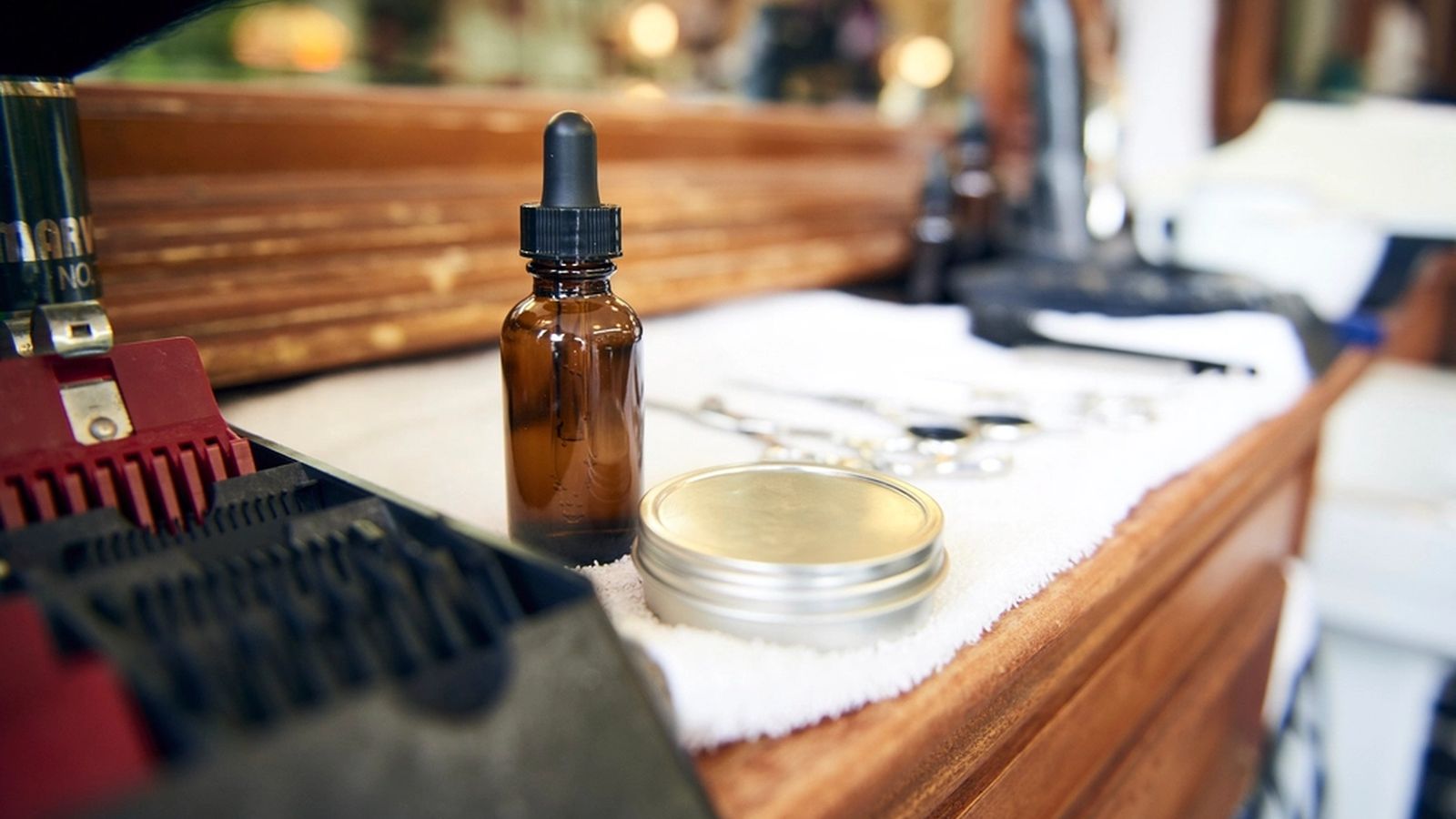
It was 3:10 on a Saturday, with a client in my chair and four more on the book.
I looked up into the mirror to check her layers and saw myself standing behind her, looking five months pregnant. At nine that morning my stomach had been flat, and now the button on my jeans was digging in so hard that I'd undone it under my apron.
My client caught me looking, patted her own belly and laughed. "Menopause, right? Mine too, honey."
I laughed with her, because every woman over 45 who sits in my chair says the same thing. So I believed it for almost a year, right up until a pharmacist asked me a question nobody else had.
If you're flat in the morning and tight by mid-afternoon, and it has burned when you pee more than once since your periods stopped, keep reading. I think the same thing happened to you.
The Pants in the Back Room
I own a little two-chair salon, and for almost a year I planned every day in it around my stomach.
I kept a spare pair of elastic-waist pants in the back room and changed into them around two, when the jeans stopped being possible. I stopped eating lunch on Saturdays because lunch meant I'd be huge by four. Bread turned on me, then cheese, then the Friday glass of wine with my husband, Mike. When he took me out to dinner, I spent the whole meal doing math about how much I could eat and still sit in my jeans.
And there was something else going on that year that I never connected to any of it.
The Other Thing That Kept Waking Me at 2am
It always started the same way. I'd wake at two in the morning needing to pee, and it would burn like I was peeing barbed wire. Only a trickle would come out, and ten minutes later I'd need to go again. By morning there was a dull ache low in my belly, and I'd spend the day running to the bathroom between clients.
The doctor at urgent care called it a UTI, a urinary tract infection, which means an infection in your bladder. She gave me antibiotics, and it cleared up in a few days. Then it came back in the spring, and again that summer.
My doctor said it was menopause, and so was my stomach, and I believed her.
"How's Your Stomach Been?"
This March it came back for the fourth time in eighteen months, and I got a longer course of Cipro.
The pharmacist, a woman about my age named Anne, looked at her screen. "That's your fourth one in a year and a half," she said. Then she asked something no doctor had asked me all year. "How's your stomach been?"
I laughed and said I look pregnant by three o'clock, but that's menopause.
"Maybe," she said. "When did it start?"
I realized I didn't know.
"Look at your prescription history in the app tonight," she said, "and think about when your stomach changed. You'd be surprised how often those two line up."

Five Prescriptions and One Wedding Photo
That night at the kitchen table, the app showed me this:
- Bactrim last October
- Bactrim again in March
- Cipro in August
- a Z-pack for a sinus infection in December
- ten days of Cipro now
That's five rounds of antibiotics in eighteen months. Then I went looking through my photos for the first one where I'd noticed the belly. It was my niece's wedding in May, a few weeks after the second Bactrim. And I'd bought the elastic pants in September, right after the Cipro.
I sat at that table feeling sick, because the dates were right there in front of me.
My stomach had changed when the prescriptions started, months after my periods stopped.
The Circle on the Back of a Receipt
The next week I asked Anne to explain. She turned over a receipt and drew a circle with four arrows, and every arrow turned out to be something I'd already lived through.
The first arrow was the burning. "After your periods stop, you lose estrogen," she said, "and with it a lot of the lactobacilli, the good bacteria that guard your bladder. That's why these infections keep coming back in women your age." That was every two a.m. wake-up of the past year and a half.
The second arrow was the pills. "Antibiotics kill the infection, but they also kill a lot of the good bacteria in your gut, the ones that help you break down food." I thought of the upset stomach I got every time I was on them.
The third arrow was my afternoons. "Your gut starts growing back about a week after the last pill, but it doesn't come all the way back," she said. "Researchers call it an 'alternative stable state,' which basically means your gut settles into a new normal with part of its crew missing. And the more rounds you take, the more it changes."
That's why I was flat at nine and huge by three. Every meal was landing in a gut that was short-handed, so it treated normal food like a problem, and the swelling built up meal by meal. It's also why bread I'd eaten for fifty years stopped being safe, because the bread was the same and my gut had changed.
The fourth arrow went back to the top. "The antibiotics also wipe out the good bacteria down there, so the next infection finds it easier to come along." That was the itching yeast infection I got after nearly every round, and the next two a.m. wake-up a few months later.
And around it goes. By the time my stomach changed, each prescription was weeks old, so nobody connected them, and menopause got the blame.
Then I thought about Marlene, and I saw where the circle was taking me.
Where the Circle Goes: Marlene
Marlene has sat in my chair every six weeks for twenty years. She's 64, she's had bladder infections for as long as I've known her, and she's been on antibiotics every few months for years.
Two years ago her doctor told her she has IBS. Now she eats the same five foods, she knows every bathroom between her house and my salon, and last spring she skipped her grandson's birthday dinner because she couldn't risk the restaurant. She says it's just her age.
Anne had mentioned a big study where people who'd taken three or more rounds of antibiotics had more than three times the odds of being diagnosed with IBS. Marlene is where I was headed, and if you've had three or more rounds since 45, she might be where you're headed too.
Why Nothing I Was Doing Could Fix It
Most of what I was doing helps, and I still do most of it. Each thing was just aimed at something else.
- Antibiotics are aimed at the infection, and you have to take them.
- The estrogen cream my doctor has since given me is aimed at the next infection, and it's helping, but it does nothing about the rounds I'd already taken.
- Cutting foods is aimed at triggers, but the list kept growing because my gut kept reacting.
- Peppermint tea and Gas-X help with the cramps and the bubbles for about an hour.
- The probiotic from the pharmacy shelf made me gassier, and Anne said one study found the usual capsule kind slowed the gut's recovery after antibiotics.
None of them was aimed at a gut that had lost part of its crew, round after round. That needed its own help, every day, and Anne knew where I should start.
The Seed That Survives Your Stomach
"I can't tell you what to take," Anne said, "but I'd look for a spore strain. LactoSpore is one that's actually been tested on bloating."
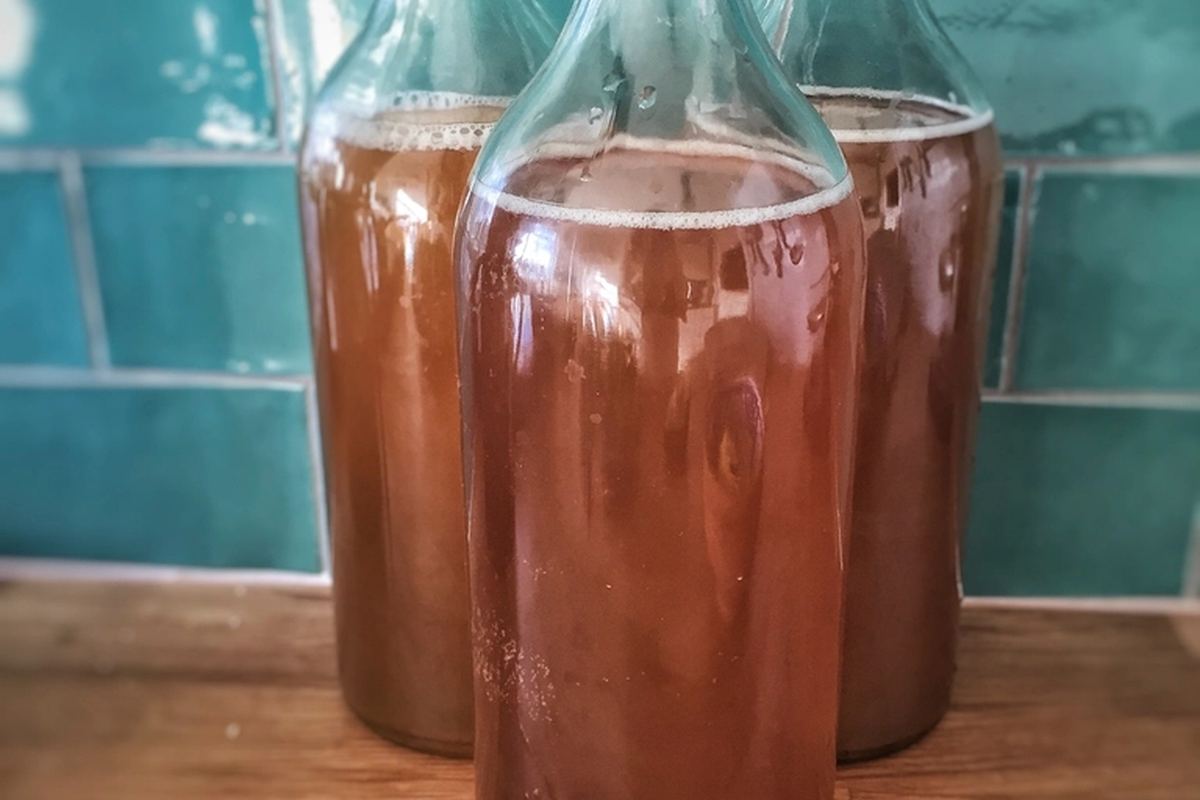
Its scientific name is Bacillus coagulans, and Anne explained it like a seed. The good bacteria sit inside a hard shell, so they survive your stomach acid and open up in your gut, where they help it handle food as it passes through. That gives the lunch you eat at noon a better chance of staying lunch, instead of turning into a balloon by three.
I wrote "LactoSpore" on my hand.
That Saturday, the "menopause, right?" client pulled a pouch of gummies out of her purse. "My daughter got me these kombucha gummies," she said. "They taste like candy, and my stomach's been so much better." I turned the pouch over, and there on the label was LactoSpore. They were called brand.
What's in the Pouch
brand was started by Eric, a kombucha brewer who learned his craft from tea farmers in Taiwan. Each gummy has:
- LactoSpore, the spore that survives stomach acid and works on the way through
- real fermented kombucha, which the company says equals a glass per gummy
- prebiotic fiber to feed the good bacteria you still have, and slippery elm to soothe
- only 2 grams of sugar
Nothing on a shelf can put back what the antibiotics took, so you take one a day to give the gut you have now its daily help.

What Happened in a Trial With 70 Bloated Adults
That exact strain was tested on 70 adults with chronic gas and bloating. After four weeks, the people taking it had seen their gas-and-bloating scores drop 65%, against 11% for the group on a placebo.
On Amazon, brand has 4.3 stars from more than 2,100 ratings, and one review could have come from my own chair:
"During this menopausal time in my life everything I put in my mouth makes me bloat. When I saw someone post that this is good I tried it. Best thing ever."
One warning: if you have a UTI, you still need the antibiotics, because brand doesn't treat UTIs. If you're on other medication, ask your doctor first. I asked mine, and she said go ahead.
Six Weeks Later, My Jeans Stayed Buttoned
By the end of the first week, the tight feeling that always hit at three didn't show up until five. In week two I worked a full Saturday and was sweeping up at six before I noticed my jeans were still buttoned.
In week four I ate lunch on a Saturday for the first time in a year, a turkey sandwich on bread, and by week six the elastic pants were in a bag for Goodwill.
Last Friday Mike took me to dinner. I wore my good jeans and ordered the pasta without doing any math, and when he offered to split dessert, I told him to get his own.
My client looked at me in the mirror last Saturday and asked what I was doing, because I looked great. I just pointed at her purse. And at Marlene's last appointment, I put a pouch in her hand. She laughed at me, but she's taking them.
Count Yours Tonight
Tonight, before bed, open your pharmacy app and count your rounds of antibiotics since 45, for every bladder infection, sinus infection and tooth. Then find the photo where your belly started. If they line up like mine did, you'll know menopause isn't the whole story.
The count only goes up from here, because cold and sinus season is starting and these infections come back, and your gut won't bounce all the way back on its own.
The 60-Day Gut Reset
- two packs every 60 days, one gummy a day
- a free extra pack with your first and second delivery
- $49.99 every 60 days, which is less than a dollar a day, with free shipping, and you can cancel online any time
- a 30-day money-back guarantee: take it every day for a month, and if your stomach doesn't feel different, you get your money back
That's a month to find out if your jeans still fit at four o'clock.
Start the 60-Day Gut Reset hereLink disabled in this portfolio sampleThe next time you catch yourself in a mirror at three o'clock, I hope all you see is you.
These statements have not been evaluated by the Food and Drug Administration. This product is not intended to diagnose, treat, cure, or prevent any disease. Individual results vary.
Portfolio sample. Copy shown as it shipped for a client in health ecom; brand and product names are withheld and buy links are disabled. Product claims belong to the advertiser. This is not medical advice. Photos are stock images chosen for this sample, not from the original ad.