Donna and I Took the Same Calcium Pill for Our Bones Every Morning. Her Artery Came Back "Hard as Bone." Then I Found Three Words on My Own Mammogram.
We're both 58, we went through menopause the same year, and we were both told we were "normal for our age." If you take calcium for your bones, you'll want to read your last mammogram report tonight.

Every morning at 6:30, my friend Donna and I walk the same loop around our neighborhood, and we've been doing it for almost ten years now.
We're the same age, 58, and we went through menopause within a few months of each other, so we've pretty much been through all of it together.
After our bone scans came back a little thin, we even bought our calcium together at Costco. Then Donna found these matching weekly pill organizers, a blue one for me and a green one for her, and we thought that was just the funniest thing.
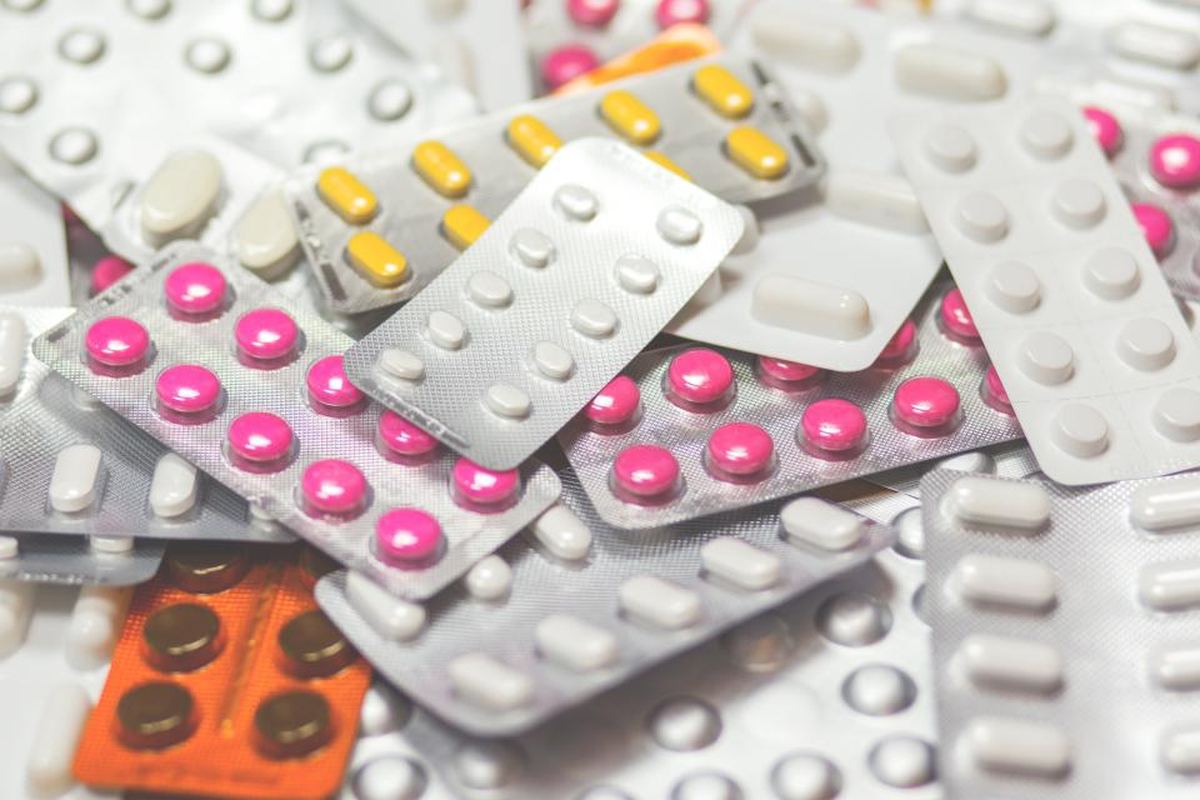
We had the same stack in both of them, too. Calcium with D, some fish oil, and the little blood pressure pill we'd both ended up on in our fifties.
We called them "our bone pills," and we'd laugh about how we'd turned into our mothers.
But for the last year or so, neither of us had been laughing much, because we'd both been feeling it.
We used to talk the whole way up the hill by the church, and lately we'd both be too winded to get a word out by the top.
Donna told me she'd had to stop seven times just to finish mowing her front lawn, and this is a woman who used to do the front and the back in one afternoon without thinking twice.
For me it was the nights. I'd jolt awake at 2 a.m. with my heart pounding so hard I could feel it in my chest, in my back, even in the pillow.
And I was tired all the time. But after menopause, what's normal tired anyway?
Our doctors both gave us the same two answers. "That's normal for your age," and "It's just menopause."
So I did what I always do. I'd sit down at the top of the stairs with the laundry basket for a minute, and when my husband walked by, I'd pretend I was looking for something.
The Morning Donna Didn't Show Up
Then one Tuesday, Donna wasn't at the corner.
That had never happened before. Donna is never late, not once in ten years.
At 7:10 I got a text from her husband, Rick, and it was only two words long.
"Hospital. Heart."
She lived, thank God.
When I got to the hospital that afternoon, she was propped up in the bed looking gray and so much smaller than I'd ever seen her.
She grabbed my hand and whispered, "They had to drill through my artery. The doctor said it was hard as bone."
Hard as bone. I couldn't stop hearing that.
A few minutes later her cardiologist came in, looked over her chart, and asked her one question.
"How long have you been taking calcium supplements?"
Donna looked over at me before she answered him. "Fifteen years."
And my stomach just dropped, because so had I.
"I'm His Job Now"
Donna came home about a week later, and I was there when Rick helped her up the stairs, one step at a time, with his hand on her back the whole way.

When she got to the top, she stopped to catch her breath, and she said something so quietly I almost didn't hear it.
"I'm his job now."
She'd been tired for months before it happened, the same as me, and we'd both blamed menopause for that too.
I found out later that's really common. In a study of 515 women who'd had heart attacks, 7 in 10 had unusual tiredness a month or more before it happened, and only 3 in 10 had any chest pain at all.
The Sunday after she got home, I went over to fill her pill organizer for the week.
It was the green one, of course, and it was the same as mine, compartment for compartment.
I picked up her calcium tablet, and I just stood there in her kitchen holding it for a long time.
The Three Words on My Mammogram
That night I jolted awake at 2 a.m. again, but this time I didn't lie there waiting for my heart to slow down.
I got up and dug out my mammogram report from last year. I remembered skimming it the day it came in the mail, seeing the word "normal," and putting it away.
This time I read every single line, and there it was.
"Benign vascular calcifications."
That means calcium, sitting in the blood vessels of my breast.
I've had a mammogram every year since I was 40, and that line had never been there before. And nobody had said one word to me about it.
It turns out that's pretty normal, too. Only about 4 in 10 radiologists say they always or usually mention it, even though 96% of women say they'd want to be told.
And the reason we'd want to be told is this.
Women who have it are about twice as likely to have heart disease.
I sat on the edge of the tub holding that report, and I was a hot mess, I'll be honest with you.
Because I take calcium every single morning for my bones, so how on earth was it ending up in my arteries?
Your Bones Let Go, and Your Arteries Hold On
It turns out researchers have a name for this. They call it the calcium paradox.
After menopause, your bones start losing calcium, and at the very same time, your arteries start collecting it.
And it happens most of all in women after menopause, which means women exactly like me and Donna.
The part that really got me is that the pill can make it worse.
When you get calcium from food, it comes into your blood slowly, like a drip. But a calcium pill dumps it in all at once, and your blood calcium can swing up and down for as long as six hours afterward.
There was a big study here in the U.S. where researchers scanned people's hearts, and then scanned them again ten years later to see what had changed.
The people who started out with clean heart arteries and took calcium pills were 22% more likely to have calcium in those arteries ten years later.
And the people who got the most calcium from food were actually 27% less likely.
The researchers even wrote that very little of the extra calcium from pills ends up in an adult's bones.
That went against everything I'd ever been told. I was shocked at first, and then I was just confused.
For years I'd been swallowing a pill full of calcium every morning, and it had nowhere good to go.
Why It Turns Into a Fire
Then I read the part that made me put the report down on the counter.
When calcium lands in an artery wall, it doesn't just sit there quietly.
Your body treats those tiny specks like an injury, so it sends inflammation to deal with them. Researchers now actually describe artery calcification as an inflammatory disease.
And the inflammation can lay down even more calcium, so the specks bring inflammation, and the inflammation brings more specks.
One research team asked right in the title of their paper whether it's "a vicious cycle."
On top of that, the body patches up the inflamed wall, and part of that patch is a sticky clotting protein called fibrin.
Over the years, all of that is how an artery gets hard as bone.
And that's what they had to drill through in Donna.
Why My Walks and My Turmeric Were Never Going to Be Enough
The thing is, we were both doing everything right.
We walked every morning, we ate our salads, and I'd even started taking turmeric because I'd read it was good for inflammation.
But none of that stops the specks from landing in the first place.
Our cholesterol was fine, too, both of us. It still happened to her.
And I couldn't just stop taking my calcium, because my bones are still thinning. That's a conversation for my doctor, not something I was going to quit on my own at two in the morning.
So the real question turned out to be a different one.
If the calcium is supposed to go to my bones, then what's supposed to keep it out of my arteries?
The Guard at the Door of Your Arteries
Every forum I found said the same thing: "Never take calcium without K2." And most women seem to think K2 is what sends the calcium to your bones.
What it actually does is a lot more interesting than that.
Your body makes a protein right inside the artery wall called matrix Gla protein.
You can think of it as a guard standing at the door of your arteries, and its whole job is to catch those calcium specks and keep them from settling in.
But the guard only switches on when it gets one key, and that key is vitamin K2.
Most adults don't get nearly enough K2 from a typical Western diet to switch the whole guard on. So part of it just stands there doing nothing, while the specks walk right on past.
That's why my calcium was getting in.
Researchers have tested what happens when you hand the guard its key.
- In 244 women after menopause, over 3 years, K2 cut the switched-off guard in half, and their arteries got less stiff.
- In people who already had heart disease, over 2 years, K2 slowed the new calcium building up in their heart's arteries by almost a third.
But the one that really stopped me was a study of women who were low in vitamin K.
Over one year, the arteries of the women past menopause stiffened 49% on a placebo, and only 9% on K2.
Once you switch the guard back on, the calcium has somewhere else to go.
Why a K2 Pill on Its Own Only Does Half the Job
K2 is the half everybody already talks about, and it works on the specks.
But it doesn't do anything about those sticky fibrin patches the inflamed wall has already laid down.
That's where the other half comes in, and it's called nattokinase.
Nattokinase is an enzyme from natto, which is a sticky fermented soybean food that Japanese families have been eating for over a thousand years. And here's the funny part: natto is also the richest food source of that same K2.
A Japanese researcher discovered nattokinase back in 1980, when he watched natto dissolve a fibrin clot in a dish. Since then it's been tested in people, too. In one study, a single dose had the body breaking down more of that clotting protein within a few hours, and in two 8-week studies, people's blood pressure came down as well.
So K2 switches the guard back on, and nattokinase clears away the sticky patch.
It's the same little bean, and it covers both halves of the problem.
I knew I was never going to eat natto every day, though. It's slimy and stringy, it smells really strong, and there's no way to know how much of either one you're getting in a bowl.
My Doctor Didn't Take Me Off My Calcium
I took the mammogram report and a stack of printed studies to my next appointment.
My doctor didn't take me off my bone plan. She said we'd work on getting more of my calcium from food, and that she'd look at how much I really needed from a pill.
Then I asked her about K2 and nattokinase.
Since I'm not on a blood thinner, she said it was reasonable to try them alongside everything else I was doing.
So I went looking, and I wanted three things:
- K2 and nattokinase together in one formula, so I wasn't adding yet another bottle to the bathroom counter.
- The strength printed right on the label, in FU (fibrinolytic units) for the nattokinase.
- Something simple enough to take every morning, right there in my blue organizer.
product checked every one of those boxes. It has 10,800 FU of nattokinase in every two-softgel serving, which is more than five times the 2,000 FU a day they used in the blood pressure studies.
It also has vitamin K2 (MK-7), plus turmeric, ginger, bromelain, aged garlic and olive leaf.
It's just two softgels with breakfast, and that's it.
Donna can't take it, because she's on a blood thinner since her heart attack, and nattokinase isn't for anyone on one without their doctor's OK.
So this one's just for me.

What Changed by Week Eight
For the first week I didn't notice anything, and honestly I didn't expect to.
Somewhere around week four, I realized I'd stopped jolting awake at 2 a.m.
By week eight, I wrapped the cuff around my arm at the kitchen table on a Sunday, the way I always do, and it read 129 over 81. It had been sitting in the mid-130s all year long.
At my next checkup, my doctor looked at my numbers and said, "Whatever you're doing, keep doing it."
And for once, hearing "that's normal for your age" didn't feel like a brush-off.
I Stopped Sitting Down on the Stairs
The numbers were the part I could write down, but the rest was something I could feel.
I'm not dragging at three o'clock in the afternoon anymore. I get home from work with enough left in me to cook dinner, and to actually enjoy it.
I carry the laundry basket all the way up the stairs now without stopping, so there's no more pretending I'm looking for something.
My husband noticed it before I did. "You seem lighter," he told me. "You don't sigh every time you get up anymore."
And that fear I'd been carrying around, that I'd be next, that one day I'd be somebody's job, finally started to go quiet.
If You Take Calcium for Your Bones
You probably started taking it for a good reason. Your doctor told you to, and your bone scan told you to.
But after menopause, the calcium you swallow every morning really has two places it can go. It can go to your bones, or it can go to your arteries.
I think about that a lot now. If Donna and I had heard about all this ten years ago, maybe we'd both be a lot healthier today, and maybe Rick never would have gotten that phone call.
You're hearing it sooner than we did.
And tomorrow morning, you're going to take another one.
- Please don't stop your calcium on your own. Talk to your doctor about it, and ask about getting more of it from food.
- Read your last mammogram report tonight. Look for those three words, "benign vascular calcifications," and if they're there, ask your doctor what they mean for your heart.
- Check with your doctor first before you add anything new, especially if you take a blood thinner, have a bleeding problem or have surgery coming up.
Last Monday at 6:30, Donna was back at the corner waiting for me.
She's a little slower than she used to be, and her green organizer was in her bag right next to mine.
We took the hill by the church together, nice and easy.
And for the first time in a long time, I talked the whole way up.
Try product risk-free for 90 days. If it isn't right for you, just send it back for a full refund.
Click here to try productLink disabled in this portfolio samplePortfolio sample. Copy shown as it shipped for a client in health ecom; brand and product names are withheld and buy links are disabled. Product claims belong to the advertiser. This is not medical advice. Photos are stock images chosen for this sample, not from the original ad.