Heart Attack Risk Is Six Times Higher the Week After the Flu. My Dad's Cardiologist Said That Wasn't Even the Scary Part.
If you're over 50, what he told us in that hallway applies to you too, and not just in flu season.
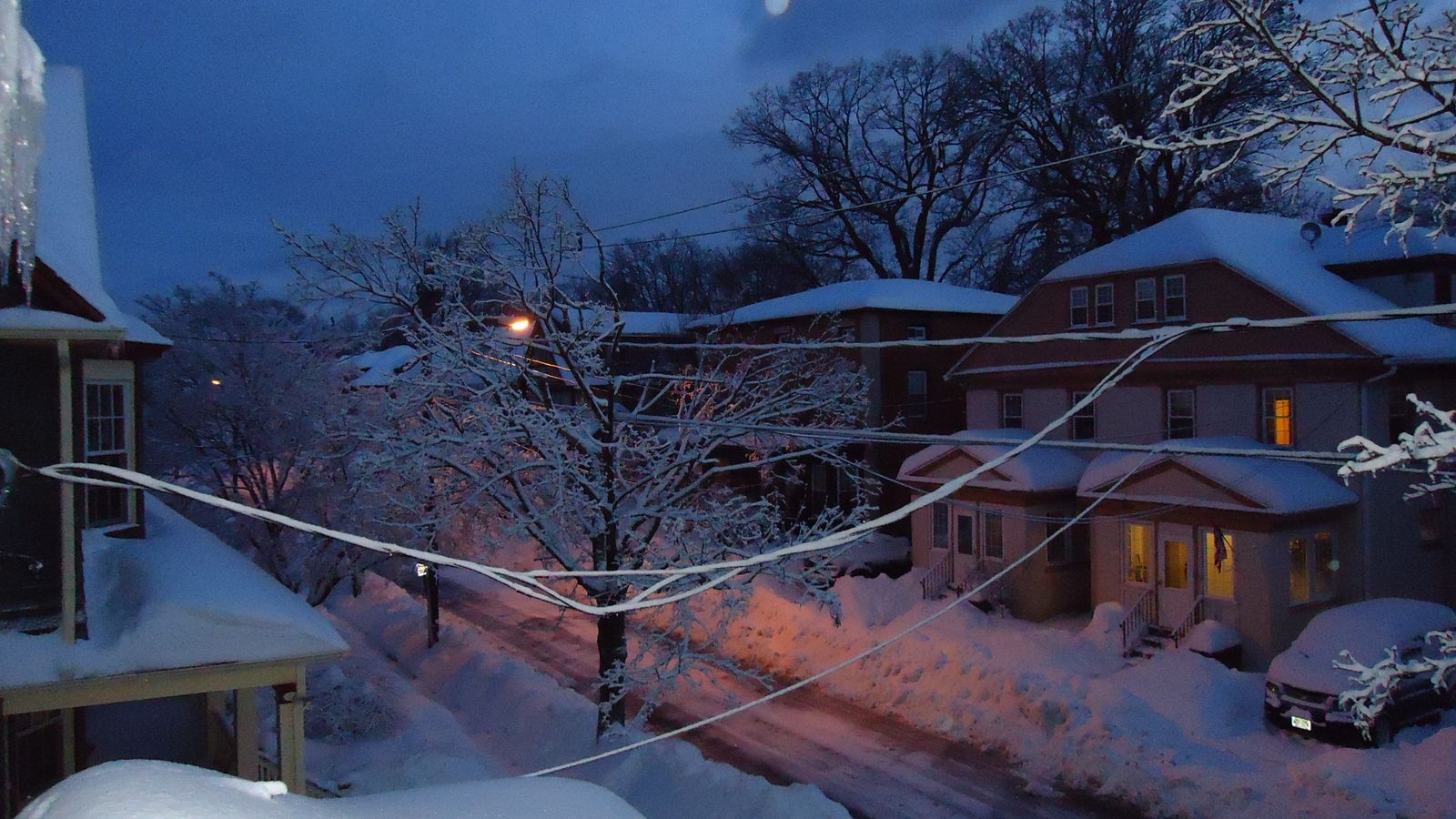
My mom found my dad on the front porch step with the ice scraper still in his hand.
He was 77. A retired mail carrier who'd walked twelve miles a day for thirty-one years.
He'd been over the flu for four days. The fever broke on Tuesday. On Thursday his chest felt tight, and he blamed the flu still sitting in his lungs. On Saturday he went out to scrape the driveway, because, as he told my mother, he wasn't made of glass.
She found him grey… sweating in the cold… breathing like he'd carried a full mail sack up a hill.
One of the arteries on the front of his heart had closed. They opened it in the cath lab that afternoon, and he lived.
I'm telling you this because of what happened next, and because of who I am.
I'm 54. Last spring my calcium score came back 112. "Mild," my doctor said. "Something to watch." My blood pressure has been borderline for three years.
I have my father's arteries. And his habit of assuming I'm fine.
So when the cardiologist stopped us in the hallway, every word sounded like a warning about me.
"The Flu Is Just the One We Measured"
He looked like he'd been up all night.
"We see this every flu season," he said. "People get over the fever, they start feeling like themselves again, and about a week later we see them in here. Most of them thought the tight chest was just the flu hanging on."
My mother asked what every family asks next. "So we just have to get him through flu season?"
He shook his head.
"The flu is just the one we measured."
A bad chest cold does the same thing, he said. So does a funeral. His blood gets pushed toward clotting over and over, all year, and the flu is just the loudest time.
Then his pager went off, and he was gone.
Six Times… and the Flu Was Only One of Them
That night I looked it up.
A big study out of Canada had looked at exactly this. In the week after a flu diagnosis, the risk of a heart attack was about SIX times higher than usual. It ran in the New England Journal of Medicine.
Six times. In the week most people go back to work.
And the cardiologist was right about the rest:
- Other viruses raised the risk too.
- A British study found about five times the risk in the first days after a bad chest infection.
- The average adult catches two or three colds a year.
- In older people, clotting protein runs higher all winter.
- In the day after losing someone close, the risk is about twenty-one times higher.
Count how many of those you'll go through this year.
Nobody gets through all of that by being careful for one week.
The Flu Is the Match. The Kindling Is Already There.
If you're over 50, there's a good chance you have some plaque in your arteries. Most of the time it sits quietly.
When plaque cracks, your body patches it with a clot made of a sticky protein called fibrin. How big that clot gets depends partly on how much fibrin is already lying around.
That's the kindling.
Your body makes a little fibrin every day, and it has its own clean-up system to clear it. Doctors call it fibrinolysis. As you get older, that clean-up slows down, so more fibrin can sit there… waiting.
Then something strikes a match. The flu inflames your arteries and floods your blood with extra clotting protein. A bad cold can do a smaller version. So can grief.
Seventy-seven years gave my dad plenty of kindling. The flu just struck the match.
And at 54, with a calcium score of 112, I had to assume I had some too.
You can't keep every match away.
You don't know which week the next one lands.
So the kindling is the part you work on. Every day.
And nothing we'd been counting on was aimed at it.

The Part Nobody Was Treating
Dad did everything right. His statin every night for ten years. His blood pressure pill every morning. Rest, fluids and Tylenol when the flu hit.
The Tylenol made him feel better, which is exactly why he was out on the driveway. The statin works on cholesterol. The pressure pill works on the pressure. The flu shot covers the flu, one match out of many. And the twelve miles a day didn't stop it either.
None of it touches the kindling.
"Just be careful the week after" doesn't work either. The surge starts with the fever. By the time you feel well enough to think about it, you're already in the window.
I only found out that anything works on the kindling because of a warning.
The Supplement on the Nurse's Warning List
In Dad's second week of cardiac rehab, a nurse went over his new medicines with us. He was on a blood thinner now, plus aspirin. She had a printed list of supplements he couldn't take with them.
High-dose fish oil. Ginkgo. And one I'd never heard of: nattokinase.
"Natto-what?" Dad said.
"It comes from natto, a fermented soybean food from Japan," she said. "It breaks down fibrin, the stuff clots are made of. On top of his blood thinner, that's too much."
Dad shrugged. I couldn't.
Every supplement I'd ever bought had promised the moon and done nothing. Here was one a cardiac nurse had put on a warning list… because it actually does something to the kindling.
A Japanese researcher, Dr. Hiroyuki Sumi, found it in 1980 while testing foods against blood clots. Natto broke a fibrin clot down in a dish. Since then it's been tested in people. In one study, blood tests showed the body breaking down more clotting protein within hours of a single dose. Everything stayed in the normal range. Two small eight-week studies found a modest drop in blood pressure.
It won't unclog an artery, and it won't replace your medicines. It works on the one thing nothing on Dad's kitchen counter touched.
Dad can't take it. He's on a blood thinner.
I'm not.
The Question I Was Embarrassed to Ask My Doctor
I took the printouts to my doctor, feeling a little silly.
First she gave me the flu shot I'd skipped the year before. One match off the table.
I asked about a baby aspirin. The guidelines changed in 2022, she said. For most people without heart disease, the bleeding risk can be bigger than the benefit.
Then I asked about nattokinase. No blood thinner, no bleeding problems, no surgery coming up… she said it was reasonable to try, as long as I told her if anything changed.
Eating natto was out. You can't tell how much enzyme is in the bowl. And some of the cheap bottles I found didn't even list a strength. So I looked for three things:
- The strength on the label, in FU (fibrinolytic units).
- Vitamin K2 in the same formula, for the protein that helps keep calcium out of artery walls.
- Simple enough to take every morning, all year.
product checked every box. 10,800 FU of nattokinase per serving, plus vitamin K2 (MK-7), aged garlic, turmeric, ginger and olive leaf.
Two softgels with breakfast, and nothing to remember when I'm sick.
Week Eight, at the Pharmacy Machine
Week one, I felt nothing. I didn't expect to.
Week eight, I checked my pressure on the machine at the pharmacy, the way I had for three years.
132 over 84.
Not a miracle. But the lowest number I'd seen since my doctor first said "borderline."
Then came the part I didn't expect. The fear got quieter.
When my three-year-old grandson climbed into my lap with a runny nose, I didn't flinch.
When somebody coughed behind me in church, I didn't start doing the math.
My mother stopped calling every morning in January to ask how I was feeling.
And I stopped lying awake listening to my own heartbeat.
Nine months in, two matches landed in the same week.
Two Matches in One Week
That December my aunt died, the one who taught me to drive. The week of the funeral I caught a chest cold at the wake.
A cold and grief in the same week. Exactly what the cardiologist had warned us about.
The old me would have spent that week counting days… waiting for the tight chest.
This time I took my two softgels, the way I had every morning since March. When the fever broke, I let my husband Mike carry the folding chairs back to the church.
And I slept.
I've stopped dreading the calendar. And I've stopped waiting for the phone to ring.
If You're Over 50, Here's What I'd Want You to Know
- The flu is only the one they measured. Bad chest colds and hard losses push your blood toward clotting too.
- Get your flu shot anyway. It's been linked to fewer heart attacks, and it takes one match off the table.
- Rest when you're sick, but don't mistake it for protection. You won't feel the window open.
- Don't blame a tight chest on being sick. Chest pressure, shortness of breath, a cold sweat, nausea, or pain in your jaw or arm means call 911. Call your daughter after.
And if you're not on a blood thinner and your doctor says it's OK, work on the kindling every day. Not just in flu season.
This is what I take:
90-day money-back guarantee. If it isn't right for you, you get your money back.
The matches will come. Work on what they land on.
Not for people taking blood thinners or anti-platelet medicine, people with bleeding disorders, or anyone with surgery coming up. Talk to your doctor before starting any supplement. This doesn't replace your flu shot or any medicine you've been prescribed. This story is a composite based on common experiences; individual results vary.
Portfolio sample. Copy shown as it shipped for a client in health ecom; brand and product names are withheld and buy links are disabled. Product claims belong to the advertiser. This is not medical advice. Photos are stock images chosen for this sample, not from the original ad.